

Smart Beginner Power Tools for Small Woodworking Shops
The exact power tool setup I’d add next in a small shop — maximum capability, minimal space.
In a small woodworking shop, power tools should save time and effort — not take over your space.
This page exists so you don’t end up buying random machines that barely get used or don’t fit your workflow. Instead, this setup focuses on a short list of well‑chosen power tools that dramatically expand what you can build, while still storing easily in a garage, basement, or shared space.
This setup is based on tools that consistently remove the biggest bottlenecks beginners hit after hand tools: drilling, cutting straight, sanding efficiently, supporting work, and basic cleanup.
This list is intentionally short.
Beginners don't need more tools — they need better decisions.
What I Mean by “Smart Power Tools”
When I say smart, I don’t mean the biggest or most powerful tools.
Here, smart means:
Tools that replace several corded or single‑purpose tools
Tools that remain useful as your skills improve
Tools that store easily in a small shop
Tools that improve accuracy, speed, and safety
Fewer machines. More output.
Core Cordless Tools
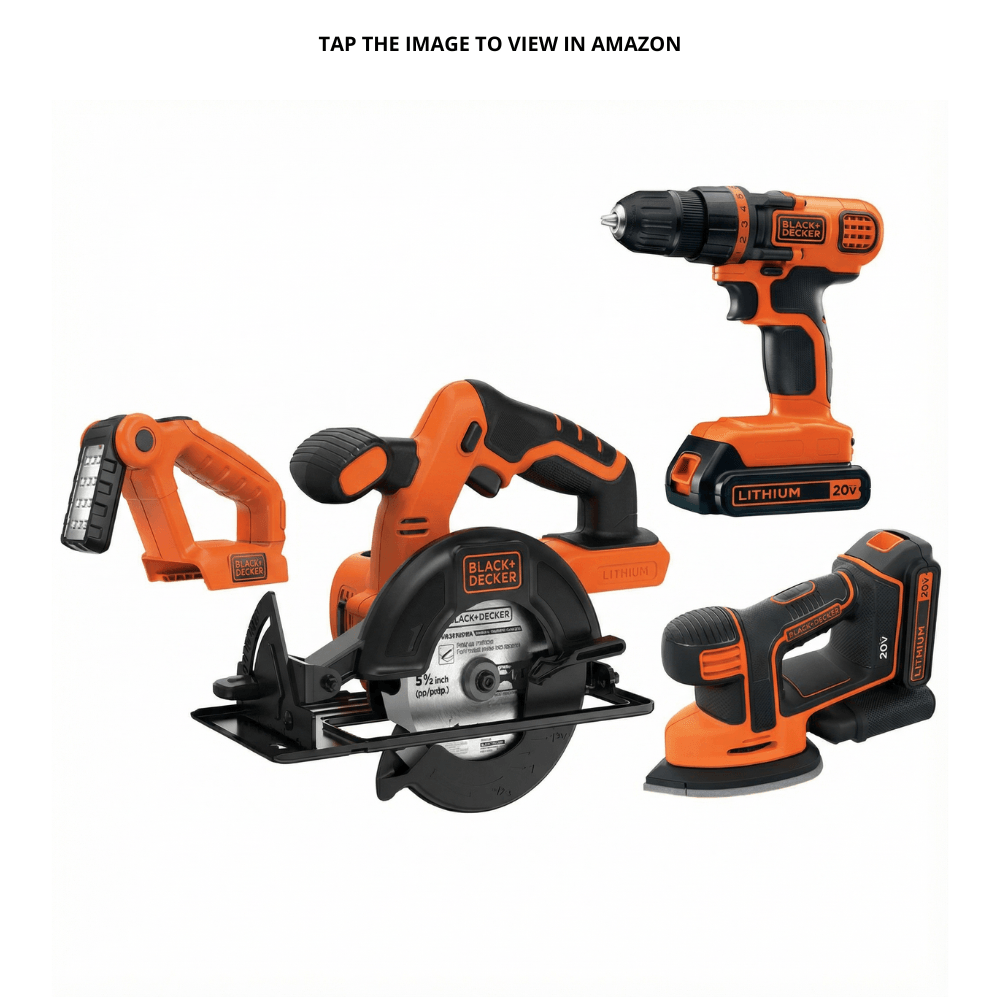
BLACK+DECKER 20V Combo Kit (Drill + Circular Saw + Mouse Sander + Light)
What it is:
A cordless 4-tool set that covers drilling, cutting, sanding, and lighting with one battery platform.
Why it’s smart in a small shop:
One kit handles the core tasks without buying tools separately
Cordless setup keeps your bench clear and easy to move around
Good control features (clutch, bevel, depth adjust) for cleaner results
What you can do with it:
Drill holes and drive screws for builds and repairs
Cut boards and sheet goods with the 5-1/2" circular saw
Sand corners and tight areas with the MOUSE detail sander
Light up benches, cabinets, and dark corners with the work light
Work Support & Clamping
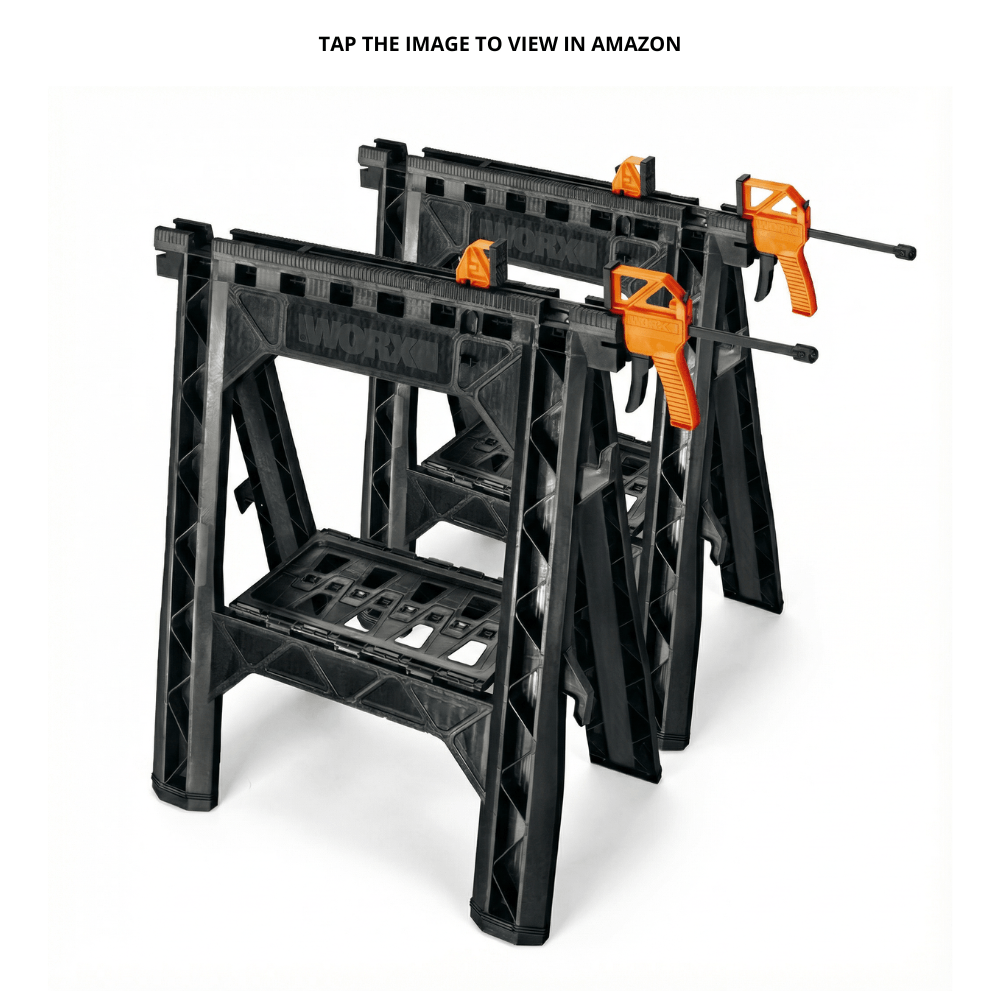
Worx WX065 Clamping Sawhorses with Bar Clamps
What it is:
A pair of lightweight sawhorses with built-in bar clamps to hold workpieces securely.
Why it’s smart in a small shop:
Clamps are integrated, so you get support + holding in one setup
Easy to carry and store when space is tight
Lets you work solo by keeping big pieces steady
What you can do with it:
Support and clamp boards or panels for cutting and sanding
Hold pieces vertically or horizontally for assembly and drilling
Use the detachable bar clamps separately when you need them elsewhere

IRWIN QUICK-GRIP 6" Mini Bar Clamp – 4-Pack
What it is:
A 4-pack of compact one-handed clamps for quick holding and light glue-ups.
Why it’s smart in a small shop:
One-hand squeeze makes positioning and clamping fast
Mini size fits tight spots where regular clamps don’t
Non-marring pads grip securely without denting your work
What you can do with it:
Hold small parts for drilling, sanding, or routing
Clamp trim, edging, and small assemblies during glue-up
Use as a “third hand” to align pieces while you screw or nail them in place
If you already own these from the hand-tool stage, you don’t need to buy them again.
Cleanup
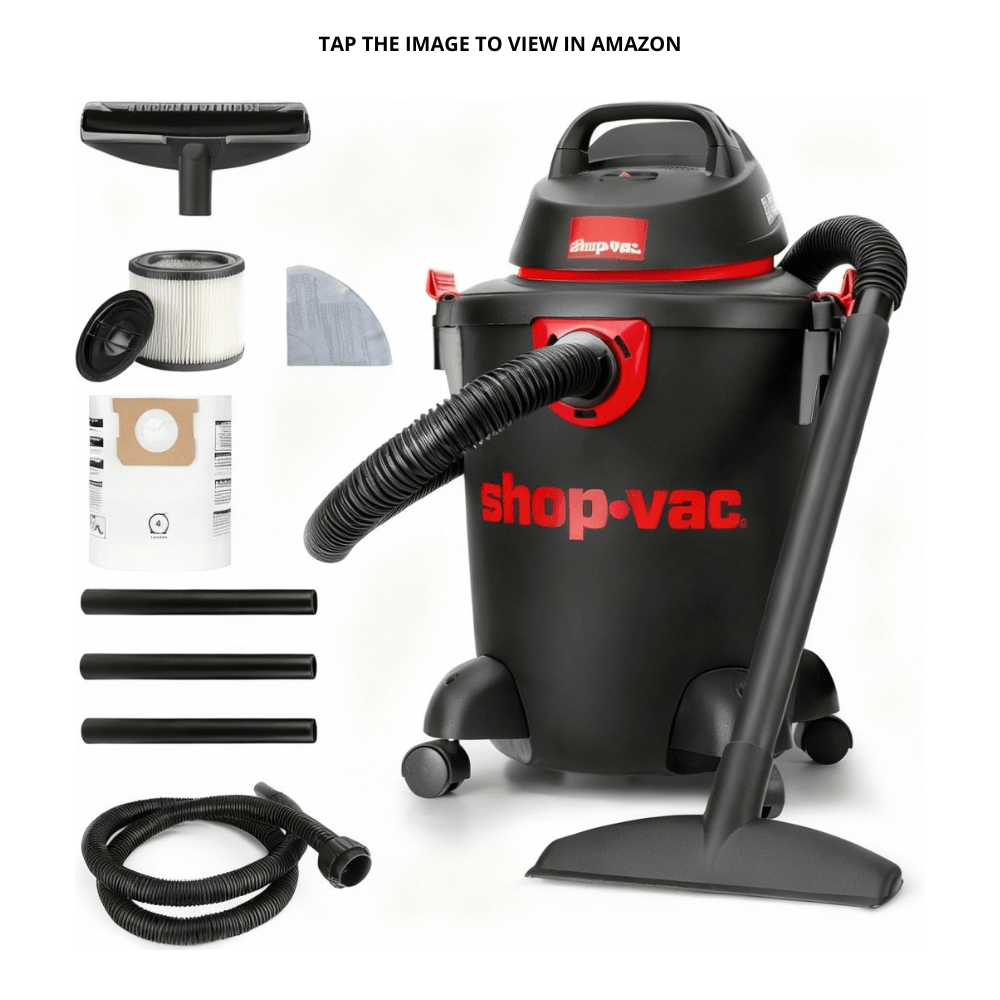
Shop-Vac 6 Gallon Wet/Dry Vacuum
What it is:
A compact 6-gallon wet/dry shop vacuum for sawdust, debris, and small spills.
Why it’s smart in a small shop:
Handles both dry messes and wet cleanup with one machine
6-gallon tank is a good size: solid capacity without taking over your space
Hose, cord, and tool storage keep everything together and easy to grab
What you can do with it:
Clean up sawdust, chips, and floor debris fast
Vacuum out tools, benches, and project corners
Pick up small liquid spills in the garage or shop
How to Use This Setup
This list is not about buying everything at once. It’s a progression.
1 - Identify your biggest bottleneck (slow drilling, inaccurate cuts, long sanding time).
2 - Add one tool that removes that bottleneck.
3 - Use it on several projects.
4 - Only add the next tool when it clearly unlocks more capability.
The result: a small shop that gets faster and cleaner — not more crowded.
What’s Next?
When you start wanting more precision, repeatability, and efficiency, compact machines become the logical next step.
Random tools create clutter.
A smart system creates real progress.
Ultimate Small Shop shows you how to choose tools, plan upgrades, manage dust, and avoid the biggest beginner mistakes.
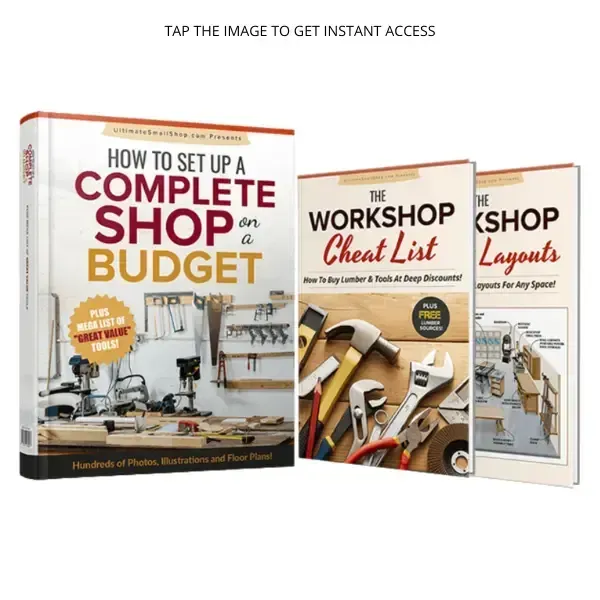
It’s the roadmap I wish I had before I wasted $2,000 and 2 years figuring everything out the hard way.
✓ 60-day money-back guarantee
If a tool stops making sense for beginners or small shops, I remove it from this list
Affiliate disclosure:
Some links on this page are affiliate links. If you buy through them, I may earn a small commission at no extra cost to you.
I only recommend tools that make sense for beginners and small shops.
Who’s Behind DIY Wood Pro?
I'm Dan Miller — Beginner-Friendly Small Shop Specialist.
I wasted over 2 years and more than $2,000 setting up my first shop the wrong way.
Now I help beginners build smart, organized, small-space shops — without guesswork, overwhelm, or wasted money.

© DIY Wood Pro
Small Woodworking Shops on a Budget
DIY Wood Pro participates in the Amazon Services LLC Associates Program.
Some links on this site are affiliate links.
If you buy through them, I may earn a small commission at no extra cost to you.
I only recommend tools and resources that make sense for beginners and small shops.