
Softest to hardest at a glance
The bar shows Janka hardness: the force in pounds needed to press a small steel ball halfway into the wood. Higher means harder and more dent-resistant, but also harder to cut, sand and nail.
Each wood: when to choose it and what for
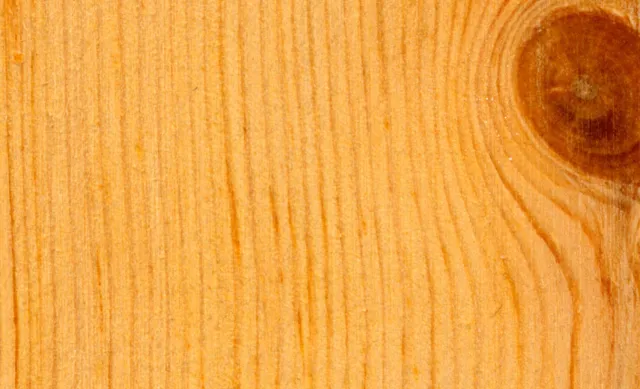
Pine 380 lbf
Choose it when: You want a cheap, light, easy-to-cut wood to practice on, or the project will be painted.
Best uses: First projects, shelves, painted furniture, shop jigs and storage.
Watch out: Dents easily and knots can bleed through paint: seal them first. 380 lbf is eastern white pine; southern yellow pine is harder.
Sample from "16 wood samples" by Anonimski, CC0, via Wikimedia Commons

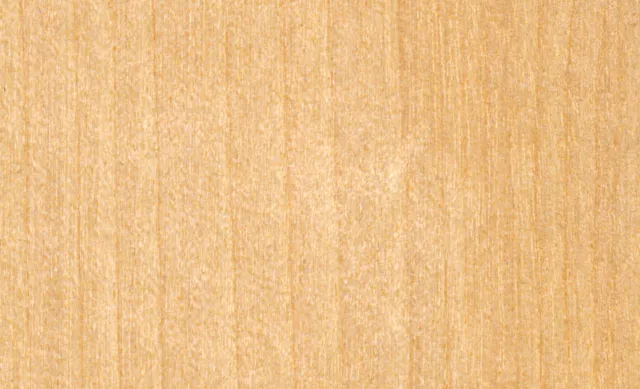
Birch 1,260 lbf
Choose it when: You want a pale, smooth, fine-grained hardwood that takes paint well, or you buy plywood.
Best uses: Birch plywood cabinets and drawers, painted furniture, toys and shop cabinets.
Watch out: Can blotch under stain: use a pre-stain conditioner or a gel stain.
Sample from "16 wood samples" by Anonimski, CC0, via Wikimedia Commons

Cherry 950 lbf
Choose it when: You want a fine-grained wood that darkens to a deep reddish-brown with age and light.
Best uses: Fine furniture, jewelry and keepsake boxes, cabinets and turned bowls.
Watch out: Burns easily with a dull blade or router bit, and can blotch with stain. Let it darken naturally.
Crop of "Popular American Furniture Wood Types" by DutchCrafters, CC BY-SA 4.0, via Wikimedia Commons


Black walnut 1,010 lbf
Choose it when: You want a rich dark wood that looks expensive with just an oil finish.
Best uses: Cutting and charcuterie boards, tables, gifts and accents mixed with maple.
Watch out: Costs more than most domestic woods; plan your cuts to save the best grain.
Crop of "Popular American Furniture Wood Types" by DutchCrafters, CC BY-SA 4.0, via Wikimedia Commons
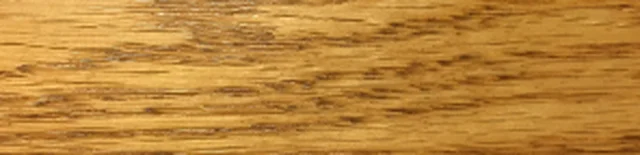
Red oak 1,220 lbf
Choose it when: You want a strong, affordable hardwood with a bold, open grain.
Best uses: Classic furniture, trim, stair parts and indoor tables.
Watch out: Open pores soak up water: not for outdoor use or cutting boards. Use white oak outside.
Crop of "Popular American Furniture Wood Types" by DutchCrafters, CC BY-SA 4.0, via Wikimedia Commons
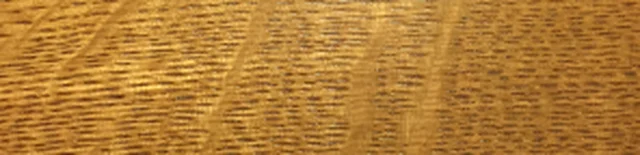
White oak (quarter-sawn) 1,350 lbf
Choose it when: You need oak that resists water, or you want the ray-fleck look of Mission-style furniture.
Best uses: Outdoor furniture, Mission and Craftsman pieces, flooring and barrels.
Watch out: Quarter-sawn boards cost more but stay flatter and show the famous flecks.
Crop of "Popular American Furniture Wood Types" by DutchCrafters, CC BY-SA 4.0, via Wikimedia Commons
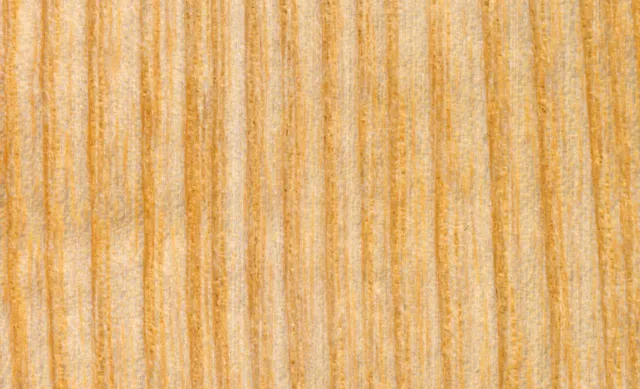
Ash 1,320 lbf
Choose it when: You need a tough, shock-resistant wood that bends well and stays light in color.
Best uses: Tool handles, chair parts, bent laminations and light-colored tables.
Watch out: Looks similar to oak; not rot-resistant outdoors.
Sample from "16 wood samples" by Anonimski, CC0, via Wikimedia Commons
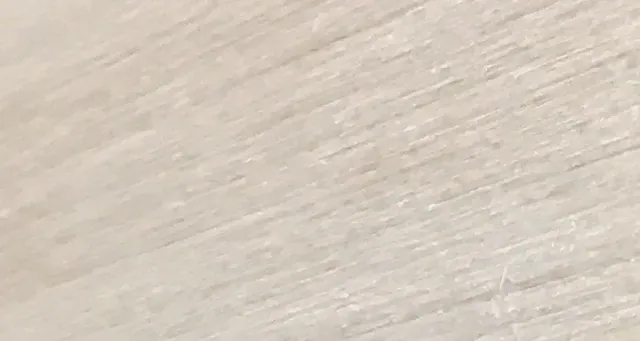
Hard maple 1,450 lbf
Choose it when: You need a very hard, pale, closed-grain wood that stands up to knives and daily wear.
Best uses: Cutting boards, butcher blocks, workbench tops, kitchen tools and flooring.
Watch out: Hard on dull tools and burns easily; can blotch when stained.
Crop of "Quartersawn White Hard Sugar Maple wood blank" by Stephen Ondich, CC BY-SA 3.0, via Wikimedia Commons

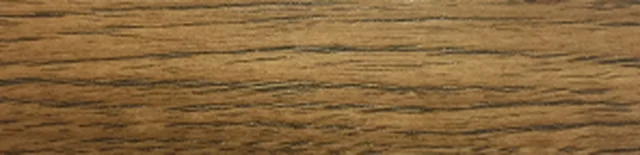
Hickory 1,880 lbf
Choose it when: You need the hardest, toughest domestic wood for parts that take impact.
Best uses: Tool and axe handles, rustic furniture, cabinets and flooring.
Watch out: Very hard to work by hand and moves a lot with humidity. Use sharp carbide tools.
Crop of "Popular American Furniture Wood Types" by DutchCrafters, CC BY-SA 4.0, via Wikimedia Commons
Quick guide by project
| Project | Good choice | Why |
|---|---|---|
| First practice project | Pine | Cheap, light and forgiving |
| Painted furniture or cabinets | Birch, birch plywood, pine | Smooth surface, grain hidden under paint |
| Cutting boards | Hard maple, walnut, cherry | Closed-grain hardwoods that resist knife marks |
| Outdoor projects | White oak | Closed pores resist water and rot |
| Dining table | Oak, walnut, maple, cherry | Hard enough for daily use, beautiful grain |
| Tool handles | Hickory, ash | Tough and shock-resistant |
| Workbench top | Hard maple, southern yellow pine | Heavy, flat and durable |
Hardness values are typical averages; individual boards vary. Let new lumber sit in your shop for a few days before you cut it, so it adjusts to the humidity.
Ready to build? Start with our woodworking tools for beginners guide.